

Teach Your Kid What School Doesn't (Pt. 1): Personalized Learning at Home
You don't have to switch schools to give your kid a world-class education. Start tonight.

Let me guess: your kid says they “hate school,” they come home more burnt out than a grown man working a 9-5, and when you ask them what they learned today at the kitchen table, they just mumble “nothing” into their plate of lasagna.
You know school isn’t giving them what they need.
But you’re also stuck.
Other schools cost more than your mortgage; your job cancels out any chance at homeschooling; and you can’t find alternative schooling options in your area that check all the boxes: rigorous academics, life skill development, vibrant socialization, and a guaranteed gut feeling that your kid is, in fact, not being treated like a guinea pig.
(Take a breath. You have more power here than you know.)
You don’t have to switch schools to give your kid an amazing education. There are so many things you can do at home to cultivate your kid’s learning.
I recently shared about the five ways traditional school is failing your kid (a one-size-fits-all approach, memorization over application, lack of life skills development, ignoring emotional health, and squashing creativity).
Over the next few weeks, I’m going to show you how to flip those failures into wins at home: personalized learning, memorization and application, life skills as core education, teaching kids to self-regulate, and unleashing kids’ inner creative genius.
Today, we’re double-clicking on personalized learning.
Thanks for being here, and happy reading.
How to introduce personalized learning at home
You don’t have to be a teacher or curriculum expert to personalize your kid’s at-home learning. The #1 thing you need to know is what makes your kid tick. What motivates them? Frustrates them? How does their brain work? What do they love? What do they hate? Are they logical, calm, and steady, or do they burst through life in solar flares of creative energy?
Four simple things you can do, in order:
1. Identify their academic knowledge gaps.
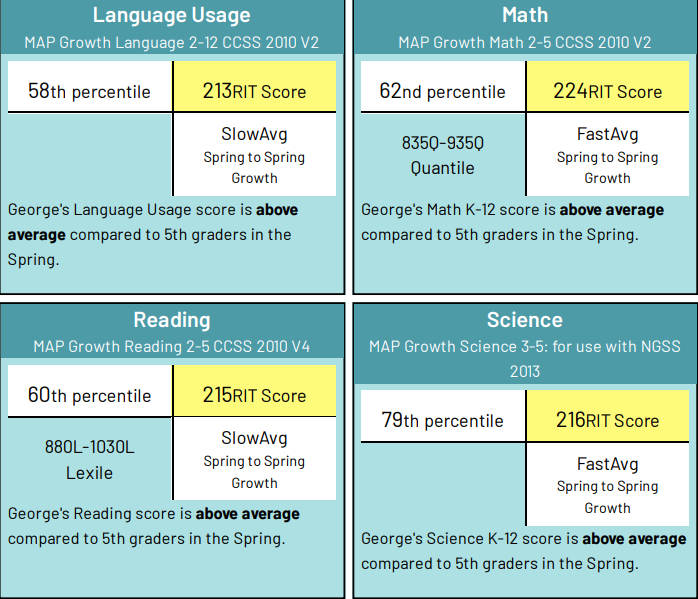
You can go to homeschoolboss.com tonight and have them take an NWEA MAP Assessment. This will identify what academic concepts they struggle with or haven’t yet mastered. (“Swiss cheese learning” is a common side effect of a standardized, time-based classroom, so I can almost guarantee that your kid will have academic holes.) For example, your seventh grader may have holes in third grade math. Don’t worry, though. This doesn’t mean they need to go back and retake third grade. It just identifies the fuzzy spots of their knowledge so you know exactly what they should be working on.
Knowing this, you can accurately supplement their learning. There are tons of great tools, YouTube videos, and online courses to help your kid with personalized academic learning, but here are 9 of my favorite AI tools for hole-filling, all of which we use at Alpha.
2. Establish a motivational model.
You can click on the above clip to hear how we establish motivational models at Alpha School. (I’m sure it will spark some ideas for you.)
With academics covered, you now need to convince your kid to do more school after school. (I’m going to go out on a limb here and say your kid probably doesn’t want to do that.) So you need a good motivational model. Which means, you need to know what motivates your kid specifically. Money? Rewards? Free time? Video games? Quality time with you? It can be as small as choosing dinner for the next week or as monumental as earning a trip to Disneyland.
Just make sure the rewards are tied directly to the effort they put in and what they find most valuable. It will be different for every kid. Your goal is to set up a system where they can earn rewards they care about and feel excited about the work they’re doing.
3. Become their mentor, not their drill sergeant.
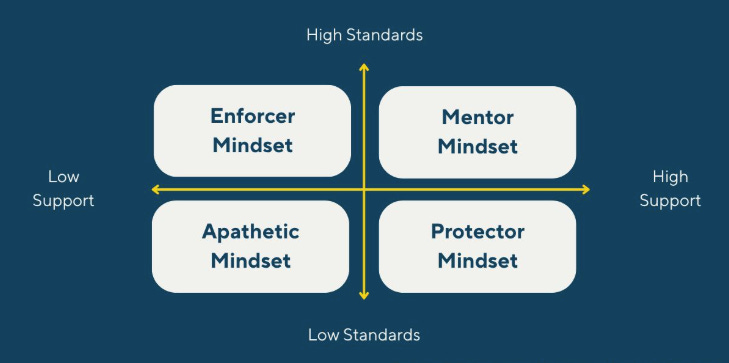
Most importantly, you need to develop what David Yeager calls “the mentor mindset”: high standards and high support. Parents are usually good at one or the other, not both. For example, the enforcer has high standards but low support (”meet this bar or you’ve failed”). The protector has high support but low standards (”don’t worry about it, let’s go get ice cream”). The neglecter has neither. The mentor combines high standards with high support, and the message is always some version of: “this is hard, I believe you can do it, and I’m going to help you get there.” This type of mentorship is what’s going to unlock your kid’s potential.
Here’s an example of how to be a mentor. Say your fourth grader is struggling through fractions on Math Academy. They turn tomato-red and announce that they’re “just bad at math.” As a mentor, you pull up a chair and say, “This one’s hard, but I know you can get it. Show me where it stopped making sense.”
A few specific moves that keep you in mentor territory:
State your high standards and your belief in your kid all in the same breath. Your kid will respond much better to “I expect this finished tonight, and I know you’ve got it” rather than “finish it or else.”
Ask questions before you correct their mistakes. “Walk me through how you got this” opens a door to healthy communication and problem-solving. A flat “this is wrong, try again” isn’t mentorship; it’s just criticism.
Be beside them, not over them. Hovering and nagging shows your kid that you doubt them. Pulling up a chair to work through the hard part together lets them know you believe in them.
Praise the grit, then help them dig even deeper. “You stuck with that even when it got frustrating. Now let’s nail the last two” rewards your kid’s effort without letting the bar slip.
The sweet spot is your kid realizing two things at the same time: this is expected of me, and I’m not doing it alone.
4. Make learning fun again!

I hope you can feel me (respectfully) shaking your shoulders through this screen. It’s okay for learning to be fun! Yes, it’s allowed! It doesn’t have to be so bland and boring all the time! This is an opportunity for you to build a joyful and exciting culture of lifelong learning in your household. Use it to bring your family closer together.
Host family trivia nights (choose different themes: history, science, literature) with popcorn and Coca-Cola — winner gets to pick the next family vacation. Visit museums and have everyone present on the coolest thing they learned. Instead of watching Netflix at night, light a few candles, pour some hot chocolate, and encourage everyone to grab a book and cozy up in the living room together. You can even host a book club.
The secret to making learning fun again is to make it an integral part of your household. Your kid shouldn’t feel an obvious difference between “learning time” vs. “fun time,” as if toggling a lightswitch on and off. They should think: “This is who my family is and this is what we do.”
You are the most important teacher in your kid’s life
If you’re stuck at a school that’s failing your kid, don’t stress. You as the parent will always be the most important teacher in your kid’s life. And you have all the power to give them a personalized learning experience at home, with pretty much zero barrier to entry. Your kid deserves it. (You got this.)
Which of these four things are you most excited to try at home? Let me know and I can give you some tips. 💭
And in next week’s essay, we’ll cover how to fill your kid’s head with knowledge and help them apply it in real life. Make sure you’re subscribed so you don’t miss it. 💙